
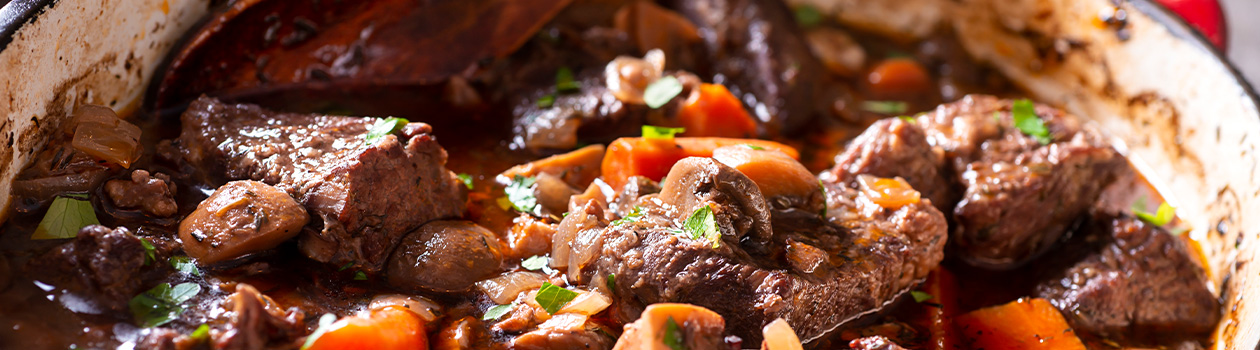
Cooler days make you want warm and generous dishes. Braising is perfect for the season: they have comforting aromas, showcase affordable ingredients and require little work once the cooking begins. And you don’t have to follow a recipe to the letter. Here’s how to compose a comfort meal with accessible meats and seasonal vegetables.
4 Ingredients and 4 steps
You don’t need a specific recipe to prepare a braise. You simply need to remember four basic ingredients and a few steps.
THE FORMULA
1 protein + 2 or 3 vegetables + 1 liquid + aromatics
THE METHOD
1. Brown the meat
In a casserole dish, sear the meat in a little oil to develop its flavours and create juices that will enrich the cooking liquid.
2. Add the ingredients
Add the vegetables, liquid and herbs.
3. Cover and cook gently
Continue cooking in the oven, covered, at a temperature of 325°F (160°C). Depending on the meat and the size of the piece, it generally takes 1 to 3 hours.
4. Check for doneness
The braise is ready when the meat is tender. Large cuts of beef or pork should flake easily with a fork.
Choosing a Braising Cut
Braising is particularly suitable for cuts of meat that need a long and gentle cooking to become tender. Several options lend themselves well to this technique:
- Blade roast (beef)
- Shoulder (pork, lamb)
- Shank (veal, pork, lamb)
- Brisket (beef)
- Whole chicken or bone-in pieces (thighs, drumsticks)
Since they often come from muscles that are more stressed and are naturally firmer, many braising cuts are also more affordable. Slow cooking allows them to tenderize, which makes them good candidates for cooking on a budget.
Enjoy Fall Vegetables
Carrots, potatoes, parsnips, turnips, squash and sweet potatoes are a natural accompaniment to braised meats. Root vegetables resist prolonged cooking well and absorb the flavours of liquid and aromatics. They also allow you to take full advantage of local harvests.
Choose two or three vegetables, varying the colours, textures and flavours. The firmer ones can cook with the meat from the beginning. Those that cook faster, such as leeks and mushrooms, benefit from being added a little later so that they retain their texture.
Add Just Enough Liquid
In a braise, the liquid creates a moist environment during cooking, without the need to use a large amount. The amount of liquid should be about half the height of the meat, without completely covering it.
The choice depends on both the meat and the desired aromatic profile. Broth remains a safe and versatile value. Cider or apple juice brings fruity notes, while beer and wine give more pronounced flavours. You can also bet on diced tomatoes: rich in water, they contribute to the cooking liquid while adding a touch of acidity.
Complete with Herbs
It is at this stage that you can customize the braise from one time to the next. Select the aromatics according to the ingredients already gathered and what you have on hand. The pantry offers a host of possibilities:
- The Essentials: onion, garlic, shallot, tomato paste
- Herbs: thyme, bay leaf, rosemary, sage, parsley
- Spices: paprika, curry, cumin, coriander
- Condiments: mustard, soy sauce, Worcestershire sauce, hot sauce
- Sweet touches: maple syrup, honey
There’s no need to multiply the ingredients. A few well-chosen aromatics are enough to create a balanced whole. Thyme and bay leaf go well with beef, while rosemary goes well with pork. With chicken, you can bet on sage, curry or mustard.
6 combinations to try
- Beef blade roast + carrots + potatoes + red wine, with onion, thyme and bay leaf.
- Chicken thighs + squash + leeks + cider, with mustard and sage.
- Pork shoulder + sweet potatoes + onions + beer, with garlic and smoked paprika.
- Pork shanks + parsnips + baby potatoes + apple juice, with rosemary, bay leaf and a touch of honey.
- Beef cross rib roast + Brussels sprouts + mushrooms + broth, with mustard, thyme and rosemary.
- Whole chicken + turnip + celery + broth, with garlic, thyme and bay leaf.
Once you master the principle, the possibilities multiply. Starting with the products on promotion and the vegetables you already have, you can improvise a different pot roast each time. And since everything is cooked in the same casserole, you get a complete meal with a minimum of dishes.
To continue on this comforting note as the cold season approaches, here are two recipes to put on the menu: a bread loaf topped with a warm artichoke dip and pork chops cooked for a long time in the oven.

